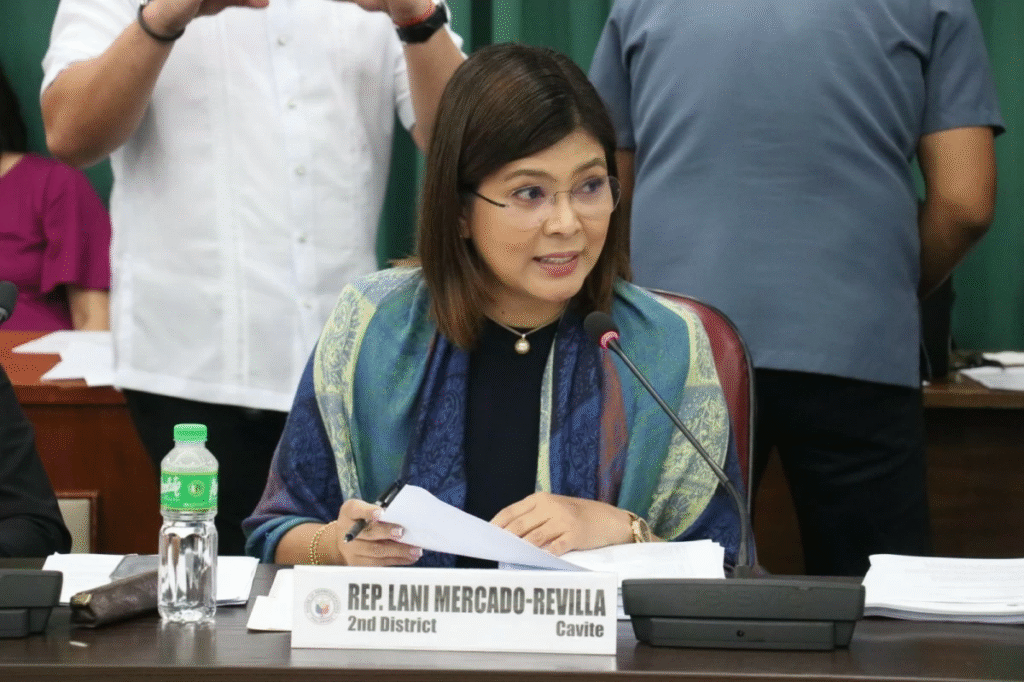
Stressing that the current fuel price crisis isn’t the Filipinos’ own doing, Cavite 2nd district Rep. Lani Mercado-Revilla says the government must take it upon itself to provide the people with immediate relief.
“Hindi kasalanan ng Pilipino ang krisis na ito, pero sila ang unang naaapektuhan. Kaya tungkulin nating kumilos agad upang maibsan ang kanilang pinapasan,” Mercado-Revilla said in a recent statement.
(The crisis is not the fault of the Filipino people, yet they are the first to be affected. That is why it is our duty to act swiftly to ease the burden they carry.)
As a member of the legislature, particularly the 300-plus strong House of Representatives, the lady solon has lodged proposals in the chamber on how to provide such respite from the economic hardships.
She has called for urgent economic relief measures, including a reduction of Value-Added Tax (VAT) on essential food items and reforms in electricity pricing, to cushion Filipino families from the impact of rising fuel costs triggered by the escalating conflict in the Middle East.
Mercado-Revilla says the global crisis is already driving up fuel prices, which in turn is pushing transport costs and basic commodity prices higher. This has placed added strain on Filipino households.
“To ease the burden on our people, we must seriously consider reducing or suspending VAT on basic necessities such as sardines, eggs, bread, coffee, sugar, and rice,” the Cavite lawmaker said.
She noted that these staple items are consumed daily by millions of Filipinos, particularly the middle class and low-income sectors who are most vulnerable to inflation.
She also reiterated her call for a review of the Tax Reform for Acceleration and Inclusion (TRAIN) Law to ensure it remains responsive to current economic realities.
“Panahon na para balikan natin ang TRAIN Law at tiyakin na hindi ito nagiging pabigat sa ating mga kababayan. Sa gitna ng krisis, dapat mas pinoprotektahan natin ang purchasing power ng ating kababayang Pilipino.)
(It is time to revisit the TRAIN Law and ensure that it does not become an added burden on our citizens. In the midst of crisis, we must safeguard the purchasing power of the Filipino people.)
In the power sector, Mercado-Revilla highlighted the need to immediately pass House Bill (HB) No. 6976, which sought to remove system loss charges being passed on to electricity consumers.
“Bilang may-akda ng House Bill No. 6976, naninindigan ako na hindi dapat ipinapasa sa consumers ang system loss charges. Ito ay inefficiency na dapat sagutin ng power companies, hindi ng taumbayan,” she emphasized.
(As the author of House Bill No. 6976, I firmly stand that system loss charges should not be passed on to consumers. This inefficiency must be shouldered by power companies, not by the people.)
She said that eliminating these charges would provide direct and immediate relief to households grappling with rising electricity costs on top of increasing prices of basic goods.