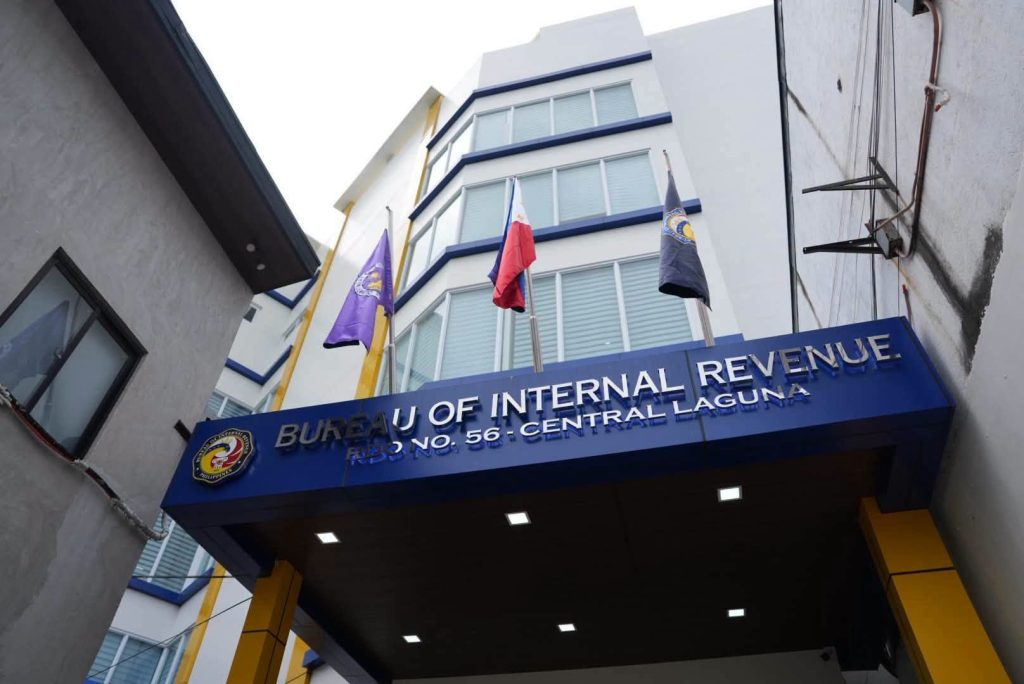
CALAMBA CITY, Laguna (PIA) — In line with President Ferdinand R. Marcos Jr.’s directive to reform tax packages, Bureau of Internal Revenue (BIR) Commissioner Charlito Martin Mendoza expressed the bureau’s commitment to provide needed relief that seeks to increase the take-home pay of Filipino families.
Mendoza said during the inauguration of a new office building in Calamba City, Laguna on Monday, August 3, that the tax reforms also include measures that seek to reduce compliance burdens and support economic activity, particularly among individuals and micro, small, and medium enterprises (MSMEs).
The BIR chief cited the bureau’s recently implemented one-time tax abatement program as an example of the agency’s efforts to provide relief to taxpayers, including the revenue regulation that serves as a special relief program for qualified small taxpayers.
“We are thankful to President Ferdinand R. Marcos Jr. for highlighting this initiative that we have already started implementing in the BIR. The bureau issued a Revenue Regulation in June that grants a one-time tax abatement for micro taxpayers with annual gross sales of not more than P3 million,” Mendoza said.
The tax aid makes room for business owners to settle or clear their outstanding tax liabilities by reducing or condoning penalties, surcharges, and interest that have accumulated over time.
Mendoza emphasized that the agency remains fully supportive of initiatives that make the tax system more responsive to the needs of taxpayers, especially those recovering from economic challenges or difficulties.
“The inspiration behind the one-time tax abatement is to help these taxpayers clean up their records with the BIR and give them a chance to start again. We understand that many of them were affected by the pandemic and economic challenges, so this program seeks to ease their burden,” he added.
Additionally, the bureau welcomes the recent pronouncement by the President during his State of the Nation Address that seeks to increase the annual income tax exemption threshold from P250,000 to P350,000, saying the measure would provide meaningful financial relief and an increase to the take-home pay of low and middle-income earners.
“We fully support that. We also know that if people have more take-home pay, they will spend it on goods and services, which in turn generates consumption taxes that contribute to government revenues,” Mendoza said.
For Rowena Pamonag, a property owner from Cabuyao City, the proposed income tax reform would provide much-needed support for small entrepreneurs and workers struggling with rising daily expenses.
“It’s a better option because it’s truly helpful especially for small businesses like sari-sari stores since they won’t immediately be burdened with taxes; it makes a huge difference,” she said.
Beyond the economic benefits, Mendoza said both one-time tax abatement and income tax exemption reflect the administration’s commitment to helping marginalized sectors and easing the financial burden faced by ordinary Filipinos amid rising living costs and economic uncertainties.
Mendoza added, “More than revenue considerations, the President has emphasized the need to help our marginalized countrymen, and we fully support that objective.” (AM/PIA CALABARZON)